In today’s competitive financial landscape, banking is no longer about moving money. It is about moving people, businesses and possibilities with speed, simplicity and confidence. That is where the right technology makes the difference. trust is not earned through promises but earned through consistent, reliable experiences, often the first interaction a customer has with their bank, which means every transaction either strengthens trust or quietly chips away at it.
For banks, this makes one issue impossible to ignore: how ATM downtime affects customer satisfaction and why modern ATM technology has become a critical investment in customer relationships, not just infrastructure.

The Real Cost of ATM Downtime
Picture a customer standing in front of an out-of-service ATM, unable to withdraw cash for an urgent need. That single moment of frustration can outweigh months of positive banking experiences.
Industry benchmarks put top-performing ATM networks at around 98% uptime or higher meaning even a small drop below that threshold translates into thousands of failed customer interactions across a large network. Each one is a moment where a customer questions whether their bank is truly dependable or not.
Consider a regional bank that struggled with unplanned outages across its ATM network. After shifting to predictive monitoring, the bank cut downtime significantly within a year, and customer complaints related to ATM service dropped alongside it. The lesson was not about new hardware fixed everything, it was that visibility into machine health, before failure happens, changed the customer experience entirely.
This is why operational efficiency has become a priority for banks investing in ATM infrastructure. Real-time diagnostics and predictive maintenance models that analyze patterns like cash dispenser wear, network latency, or card reader error rates, allows banks to flag potential failures before they affect a customer. The goal is not about fewer breakdowns; but should be on ATM network customers can rely on without a second thought.
Seamless Transactions Build Everyday Confidence
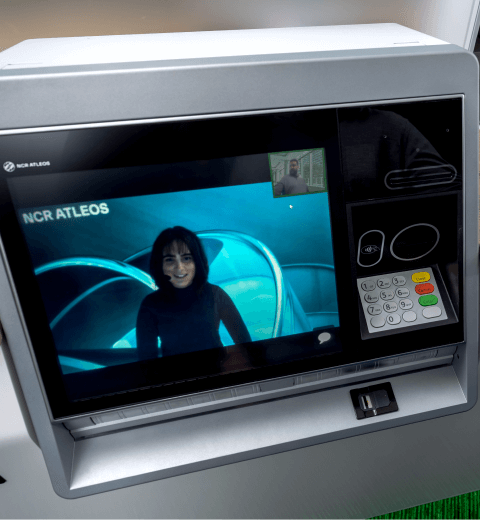
Modern machines are designed around one core principle: friction is the enemy of trust. Biometric authentication, cardless withdrawals, and contactless payments work together to make transactions faster and more intuitive.
When a transaction happens exactly as expected with no delays, no errors, no confusion, the customers barely notice the technology behind it. That is what the focus point should be. The best customer experiences are the ones that feel effortless.
These upgrades come with trade-offs. Banks that prioritize transparency, clearly explaining how biometric data is stored, encrypted, and applied earn greater customer trust than those that simply deploy the technology and expect adoption. That is why TDS, as a trusted partner, works alongside you to build confidence with your customers.
Reliable Experiences, Every Time
Trust is not built in a single transaction, it is built through reliable experiences repeated consistently over time. Customers rarely remember every successful ATM visit, but they remember the one time it failed them.
This is why leading banks are shifting from reactive maintenance to predictive, technology driven reliability. Sensors and monitoring systems track machine health continuously, flagging potential issues before they cause downtime. The result is a network customers can depend on, whether they are withdrawing cash at 8 a.m. or making a transfer at midnight.
Why This Matters for Banks
Investing in modern ATM technology isn’t just an operational decision — it’s a reputational one. Reduced downtime, improved operational efficiency, and stronger machine security translate directly into better customer experiences. Shorter queues and fewer service disruptions free up staff to focus on higher value interactions, reinforcing the bank’s image as dependable and customer focused.
None of this comes without a price. Advanced ATM infrastructure requires real investments in hardware, cybersecurity, and ongoing maintenance, which can be a genuine barrier for smaller banks and credit unions. But the cost of inaction tends to be higher: lost customers, damaged reputation, and an increasingly narrow window to catch up as competitors modernize faster.
Usability: Designing for Every Customer
Trust also depends on how easily customers can actually use the technology in front of them. Usability is often underestimated, but a confusing interface can undo the benefits of even the most advanced security or speed improvements.
Modern ATMs address this through:
- Clear, intuitive interfaces with minimal steps per transaction
- Multi-language support for diverse customer bases
- Personalized shortcuts for frequent transactions
- Accessibility features for customers with disabilities
As banking Technology becomes more digitally sophisticated, they can inadvertently alienate less tech-savvy or elderly customers, the exact opposite of the trust they are meant to build. The strongest ATM design does not assume comfort with new technology; it offers simple, guided pathways alongside advanced features, so no customer segment is left behind.
Technology is more than a tool, we can say that Technology is a bridge to customer trust. Every second of uptime, every seamless transaction, and every layer of machine security sends a message to customers: you can count on us.
By addressing ATM downtime proactively, designing for usability across all customer segments, and treating security as an ongoing commitment rather than a one-time fix, banks can deliver the reliable experiences today’s customers expect and remember.
At TDS Hitech, we believe trust is not built through promises, trust is built through consistent, and a dependable technology that shows up for customers every single day.