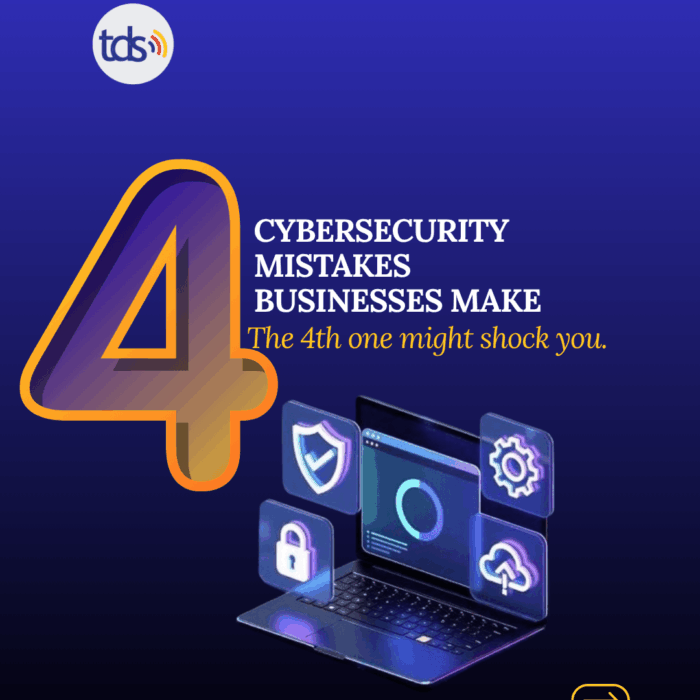
According to recent studies, 43% of cyberattacks target small and medium-sized businesses (SMEs) in Nigeria, while roughly 54% of companies globally experience at least one cyberattack every year. Cybersecurity is no longer a concern reserved for large enterprises.
Every organization, regardless of size, faces increasing cyber threats that can disrupt operations, damage reputations, and result in costly financial losses. Understanding the fundamentals of Cyber Security 101 can help businesses avoid common mistakes and build a stronger security posture
Myth 1: "My Business Is Too Small to Be Targeted"
One of the biggest misconceptions among business owners is believing that cybercriminals only target large corporations. In reality Small and growing businesses are often viewed as easier targets because they typically have fewer security controls in place.
Attackers use automated tools to scan for vulnerabilities across thousands of organizations, making businesses of all sizes potential victims.
Effective business cyber security strategies are essential for protecting sensitive data, customer information, and business operations. If your network has an open door, you become a victim of opportunity
Myth 2: Relying on Basic Antivirus Alone
Many organizations assume that installing an antivirus solution is enough to keep their systems secure. While several can provide a layer of protection against common malware, today’s cyber threats are far more complex.
The use of these solutions remains an important part of a cybersecurity strategy; they are designed primarily to detect known malware and suspicious files. Today’s cybercriminals use more sophisticated techniques to bypass traditional antivirus protection altogether:
The various attack types are:
- Ransomware
- Credential theft
- Phishing attacks
- Cloud-based attacks
The Takeaway: Modern cybersecurity needs a layered approach. Antivirus protection with employee awareness training, multi-factor authentication (MFA), email security, endpoint detection and response (EDR), regular patching, and continuous monitoring
Myth 3: Ignoring Employee Cybersecurity Awareness
Technology alone cannot prevent every cyberattack. In many cases, human error remains the primary access to security breaches.
To transform your employees from your weakest link into your strongest first line of defense, quarterly awareness training should focus on:
- Recognizing Phishing: Spotting fake emails, suspicious URLs, and spoofed domains.
- Password Hygiene: Practicing strong password creation and secure credential handling.
- Social Engineering: Identifying manipulation tactics used by attackers over email, phone, or chat.
- Incident Reporting: Knowing exactly who to notify the moment a mistake happens.
When employees understand how cyber threats work, they become an active part of your organization’s defense strategy.
Myth 4: Waiting for an Attack Before Acting
“A single breach repairs can reach up to millions of naira; it can financially devastate a growing business.” Many businesses only invest in cybersecurity after experiencing a breach.
The cost of recovery often exceeds the cost of prevention. Data loss, operational downtime, regulatory penalties, and reputational damage can have long-lasting effects on any business.
The smartest approach is proactive protection. By implementing Enterprise fit security solutions for your organisation and regularly assessing your security posture, you can significantly reduce your risk exposure.
Small Enterprise (1–50 Employees) focus on reducing common risks such as phishing, ransomware, and account compromise.
Medium Enterprise (50 – 199 Employees): move beyond prevention only strategies and invest in detection, response, and recovery capabilities.
Large Enterprise (200+) adopt a risk-based cybersecurity strategy that combines prevention, detection, response, and recovery capabilities.
Is Your Business Truly Protected? Take the 5-Point Cybersecurity Checklist for Every Business
For Enterprises to succeed in today’s highly connected business landscape, organizations must do more than simply install antivirus software and hope for the best.
Businesses that prioritize cybersecurity are better positioned to protect sensitive data, maintain customer trust, ensure operational continuity, and stay compliant with industry requirements.
Use this checklist to see where your organisation stands
- Is Multi-Factor Authentication (MFA) enabled across all corporate accounts?
- Are all your systems, operating softwares, and applications updated automatically?
- Do your employees receive regular training to recognize modern cyber threats?
- Do you use layered security controls (like EDR and secure email gateways) beyond standard antivirus?
- Do you back up critical data daily and regularly test the recovery process?
How did your business score?
- 5/5: Excellent – You’re taking important steps toward a resilient security posture.
- 3–4/5: Vulnerable- Your business has a solid foundation, but dangerous gaps remain exposed.
- 0–2/5: High Risk- Your organization is highly vulnerable to a disruptive breach and needs immediate security improvements

If your score highlighted vulnerabilities, you don’t have to navigate the fix alone. At TDS Hitech Solutions LTD, we help organizations secure their digital environments using trusted, industry leading OEM solutions from partners like Sophos, Barracuda, Oracle, and Fortinet.
From advanced endpoint protection, network security to employee awareness programs, we provide the tailor-made expertise your business needs to stay ahead of evolving threats. Take the first step toward bulletproof protection. Contact a TDS Security Expert Today.